

Flexible Funding program awards $2.2M to 96 nonprofits
January 1, 2024
Greenfield Recorder
Notably, the videos have received recognition from the U.S. Environmental Protection Agency and the Northeast Recycling Council. To better serve the diverse western Massachusetts communities, these videos have been translated into multiple languages, including Spanish, Russian, Ukrainian and Turkish.
To read the full article click here.
Share Post

Alongside Six Academic Partners Across Six States, Program Will Prepare the Next Generation of Circular Economy Leaders

The American Chemistry Council’s Plastics Division represents America’s Plastic Makers and the hundreds of thousands of scientists, engineers and technicians who develop plastics essential to modern life. From healthcare and clean energy to transportation and safe food and water, plastics drive innovation and strengthen the U.S. economy by supporting key industries and creating well-paying jobs. Companies are investing billions annually in U.S. production and recycling, advancing manufacturing and efficiency across economic sectors. We envision a future where all plastic products are reused or recycled, conserving resources and creating a cleaner, safer and more resilient world. Ross Eisenberg, president of America’s Plastic Makers at ACC said “we’re committed to ending plastic waste and advancing a circular economy for plastics, because frankly, we need plastics and modern life does rely on them.” NERC is excited to welcome the American Chemistry Council Plastics Division. We look forward to supporting their mission of advocacy for people and policy. For more information on ACC visit .
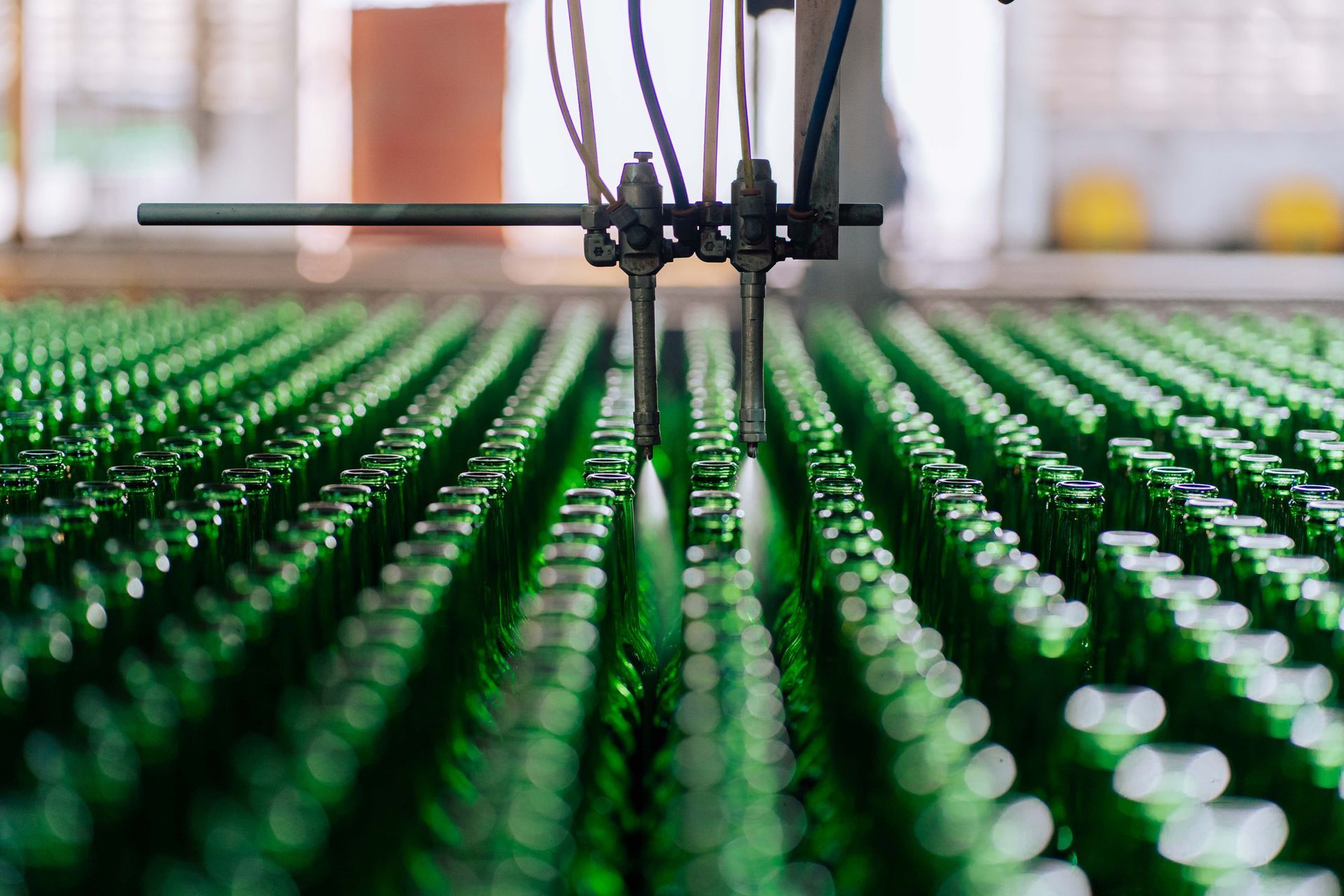
A new report on glass recycling in the Northeast shows that while a few front-running states have unlocked high recovery rates, there is plenty of room for the rest of the region to grow. To replicate the top achievements and scale up, the region must invest heavily in collection systems, processing infrastructure, and end-market development, according to the Northeast Recycling Council (NERC) study. A new report on glass recycling in the Northeast shows that while a few front-running states have unlocked high recovery rates, there is plenty of room for the rest of the region to grow. To replicate the top achievements and scale up, the region must invest heavily in collection systems, processing infrastructure, and end-market development, according to the Northeast Recycling Council (NERC) study. Read on to discover which states are leading the pack, where they excel, which regions are lagging, and what key industry and government insiders say about this evolving landscape. Some key findings: Vermont and Connecticut recycled the most glass containers relative to total waste generated. Connecticut led the region in per capita glass collection. New York State collected the greatest total tonnage of glass containers for recycling. Five Northeast states operate deposit return systems that include glass beverage containers. All Northeast states offer residential curbside and/or drop-off recycling programs. Vermont and Connecticut's standout glass container recovery rates are about 79.9% and 77.0%, respectively, with a common denominator being that they both operate deposit return systems (DRS) for these containers. They join a larger group whose recycling success is largely attributed to DRS programs. The Glass Packaging Institute reports that these states recover up to triple the glass captured in commingled streams, yielding more clean cullet for new containers than can be used. New York ranks as the top glass recycler with over 281,000 tons annually, followed by New Jersey at about 197,000 tons. With a population of nearly 8.6 million, New York City is the state’s largest municipality by far and plays a heavy-lifting role in driving up those statewide recovery numbers. Joshua Goodman, deputy commissioner, NYC Department of Sanitation (DSNY), says the key to healthy citywide participation has been keeping recycling simple and universal. “We pick up from every residence in the city – high-rise, low-rise, and single-family homes – and no one has to guess whether a particular piece of glass is recyclable – we take it all,” Goodman says. Building on residential success, DSNY is exploring targeting glass from construction waste next, a key strategy outlined in the draft 2026 Solid Waste Management Plan. While every Northeast state offers curbside and/or drop-off glass collection, their systems vary widely. They range from the DRS schemes like in Vermont and Connecticut to source-separated drop-off programs and, in some Pennsylvania communities, source-separated curbside collection. These system differences, along with reporting differences, complicate cross-state performance comparisons, underscoring the need for better data consistency and transparency, the authors say. To address these issues, NERC convenes a Glass Committee—a diverse group of stakeholders—regulators, municipalities, and glass processors among others—who help member states in standardizing tracking practices. “By engaging in projects through our [glass] committee, states can find paths to implement new programs or means of data collection,” says Megan Schulz-Fontes, executive director, Northeast Recycling Council. The organization is focusing on multiple areas with ambitions to strengthen the system. “Right now, we're working on developing resources and tools to support actors across the value chain in removing inefficient redundancies in collection and processing, developing a cleaner stream of recycled glass for long-term economic benefits, and identifying existing or emerging end markets for specific supply streams,” Schulz-Fontes says. New England holds the greatest promise for growth. Between municipal collections and bottle bills, the region generates massive volumes of recyclable glass. “We have made great strides in alternative end markets such as glass pozzolan [a sustainable replacement for cement in concrete]. “But what’s missing is dedicated processing facilities that clean and sort glass to achieve the necessary quality for new bottles. Historically, New England had these facilities. But, today, curbside glass often must be hauled hundreds of miles out of state just to reach a beneficiation plant,” Schulz-Fontes says, adding that re-establishing New England’s processing capacity will be a key lever to scaling glass recycling, regionwide. The idea is to eliminate long-distance transport costs, slash emissions, and keep the full lifecycle of bottle recycling local. Housatonic Resources Recovery Authority (HRRA) is working to take its Connecticut-based corner of New England further. The HRRA runs a regional glass-separation recycling program across 14 municipalities, serving roughly 265,000 residents. Since the initiative's 2019 launch, the authority has collected and sent over 2,000 tons of source-separated glass on for processing. Jennifer A. Heaton-Jones, executive director, Housatonic Resources Recovery Authority, points to another program plus. The operation has improved the quality of the whole mixed recycling stream by reducing glass contamination in paper, cardboard, and other recyclables. This helps increase the value of recyclable commodities and supports a more efficient recycling system overall, she says. Leadership credits the program's success largely to transparency and resident education. “We focused on helping residents understand what happens to glass when it is placed in a mixed recycling bin and why separating it creates better environmental and economic outcomes. “Once they learned that much of the glass collected through mixed recycling was not being recycled back into new bottles and jars due to contamination issues, they were very willing to change their behavior,” Heaton-Jones observes. The partnership with local glass recyclers helps—it is giving residents visible proof that their glass is being transformed to new products. “When people know their efforts make a measurable difference, participation follows,” she says. Casella processes approximately 100,000 tons of glass annually across Connecticut, Maine, Massachusetts, New Hampshire, New York, Pennsylvania, and Vermont. According to Jeff Weld, the company’s vice president of communications, they have access to several viable end markets. He cites bottle-to-bottle recycling, fiberglass manufacturing, processed glass aggregate, and additives for concrete and other construction applications. Building a diverse network of regional outlets has been a key strategy. Because glass is heavy and carries a lower commodity value, regional processing is essential to cutting transportation distances and keeping processing costs manageable, Weld says. That’s what’s most needed, he advises—more local and regional outlets to make logistics more efficient while improving the long-term economics and resiliency of glass recycling. In the broader picture, economic factors favor glass recycling, according to market research platform Worldmetric’s data . Nationwide, U.S. recycling costs $35 to $50 per ton while landfilling costs $20 to $30, according to Worldmetric’s 2026 report. The authors cite a national selling price of $80 to $100 per ton and claim recycled content saves manufacturers $10 to $15 per ton. But regional realities paint a more nuanced picture. NERC’s market value figures for the Northeast show the region faces a tighter squeeze, other than for clear glass, likely attributed to the referenced processing challenges compounded by single-stream contamination. Just the same, opportunities exist across the region. But closing the loop will require a dual approach: building robust, updated infrastructure and aggressively driving the long-term market demand to sustain it. Read on Waste360.