

Northeast Region Enjoys Strong Commodities Pricing in Spring of 2024
Arlene Karidis • June 12, 2024
Waste 360
A Northeast Recycling Council (NERC) study shows a steady rise in the average commodity price for Q1 2024—a 19 percent rate increase when including unmarketable residuals, and a 17 percent increase after removing residuals. Processing costs dropped by 7.69 percent.
The figures include data from 13 materials recovery facilities (MRFs) across 10 states: Delaware, Maine, Maryland, Massachusetts, New Jersey, New York, Pennsylvania, Rhode Island, Vermont, and Virginia. Collectively the facilities manage single stream, dual stream and source separation, with single stream being most prominent.
To read the full article click here.
Share Post

The Recycled Materials Association (ReMA) and the Northeast Recycling Council (NERC) have launched a new pilot initiative to train the next generation of recycling professionals: the Sustainable Materials Careers Program (SMCP). Take a look inside the Sustainable Materials Careers Program Building on the success of NERC's Emerging Professionals Program, which offers new professionals exposure to sustainable materials management (SMM), mentorship, and career guidance, SMCP will focus on college students — with the potential to engage high school students in the future. The program will give students a deeper understanding of career opportunities in SMM and provide hands-on pathways from the classroom to the workplace. Through Career Exploration events and professional development training, students will gain industry exposure, build foundational knowledge, and chart a clear path toward careers in sustainable materials. Career Exploration events will be part of ReMA's Recycling Jobs Day initiative, a national program connecting students with careers in the recycled materials industry. Event activities will include tours of material recovery, recycling, and/or manufacturing facilities, as well as panels highlighting diverse career pathways in the sector. "Many students want to work in sustainability, but they rarely see the diverse career paths available across the materials lifecycle," said Megan Schulz-Fontes, executive director of NERC. "By combining hands-on facility tours with foundational training, this program opens doors across every corner of the industry — including state and municipal governance, equipment and technology manufacturers, recycling infrastructure, and corporate sustainability teams — ensuring the next generation is equipped to lead." Growth in sustainability has increased the number of professionals needed to run the industry The material economy accounts for over 40 percent of U.S. greenhouse gas emissions, according to the EPA. Recycling and composting in the United States prevent the release of roughly 186 million metric tons of carbon dioxide equivalent into the air each year — an impact equal to taking over 39 million gasoline-powered cars off the road annually. Compared to the processing and transportation needed for mining, drilling, harvesting, or other methods of extracting natural resources for manufacturing, the use of recycled materials typically produces fewer greenhouse gas emissions. Global demand for green jobs is growing at 8 percent per year. Yet, LinkedIn's Global Green Skills Report highlights a shortage of qualified talent, with many roles unfilled due to limited training and a lack of mixed skills, as noted by the Institute of Sustainability Studies. SMCP addresses these gaps by increasing awareness of sustainable materials careers and offering free training to participating students. In the 2026-2027 academic year, NERC plans to hold six Career Exploration events and provide enrollment in its Foundations of Sustainable Materials and Recycling course at no cost to students from participating Academic Partners. Current Academic Partners include MIT Department of Materials Science & Engineering, Rowan University Advanced Materials & Manufacturing Institute, University of Massachusetts Lowell, University of New Hampshire Sustainability Institute, University of Southern Maine, and Yale. Read on Recycling Product News.
In partnership, Northeast Recycling Council (NERC) and Recycled Materials Association (ReMA), announce the launch of a new pilot initiative: the Sustainable Materials Careers Program (SMCP). Building on the success of NERC’s Emerging Professionals Program, which offers new professionals exposure to sustainable materials management (SMM), mentorship, and career guidance, SMCP will focus on college students – with the potential to engage high school students in the future. The program will give students a deeper understanding of career opportunities in SMM and provide hands-on pathways from the classroom to the workplace. Through Career Exploration events and professional development training, students will gain industry exposure, build foundational knowledge, and chart a clear path toward careers in sustainable materials. Career Exploration events will be part of ReMA’s Recycling Jobs Day initiative, a national program connecting students with careers in the recycled materials industry. Event activities will include tours of material recovery, recycling, and/or manufacturing facilities, as well as panels highlighting diverse career pathways in the sector. “Many students want to work in sustainability, but they rarely see the diverse career paths available across the materials lifecycle,” said Megan Schulz-Fontes, Executive Director of NERC. “By combining hands-on facility tours with foundational training, this program opens doors across every corner of the industry—including state and municipal governance, equipment and technology manufacturers, recycling infrastructure, and corporate sustainability teams—ensuring the next generation is equipped to lead.” The material economy accounts for over 40% of U.S. greenhouse gas emissions, according to the EPA. Recycling and composting in the United States prevent the release of roughly 186 million metric tons of carbon dioxide equivalent into the air each year—an impact equal to taking over 39 million gasoline-powered cars off the road annually. Compared to the processing and transportation needed for mining, drilling, harvesting, or other methods of extracting natural resources for manufacturing, the use of recycled materials typically produces fewer greenhouse gas emissions. Global demand for green jobs is growing at 8% per year. Yet, LinkedIn’s Global Green Skills Report highlights a shortage of qualified talent, with many roles unfilled due to limited training and a lack of mixed skills, as noted by the Institute of Sustainability Studies. SMCP addresses these gaps by increasing awareness of sustainable materials careers and offering free training to participating students. In the 2026-2027 academic year, NERC plans to hold six Career Exploration events and provide enrollment in its Foundations of Sustainable Materials and Recycling course at no cost to students from participating Academic Partners. Current Academic Partners include MIT Department of Materials Science & Engineering, Rowan University Advanced Materials & Manufacturing Institute, University of Massachusetts Lowell, University of New Hampshire Sustainability Institute, University of Southern Maine, and Yale Office of Sustainability. NERC invites forward-thinking businesses and organizations to support and expand the Northeast Sustainable Materials Careers Program. By becoming a Program Partner, sponsors directly enable more students to access free training and hands-on industry exposure—building a strong, qualified pipeline for the future circular economy workforce. Read on Waste Advantage.
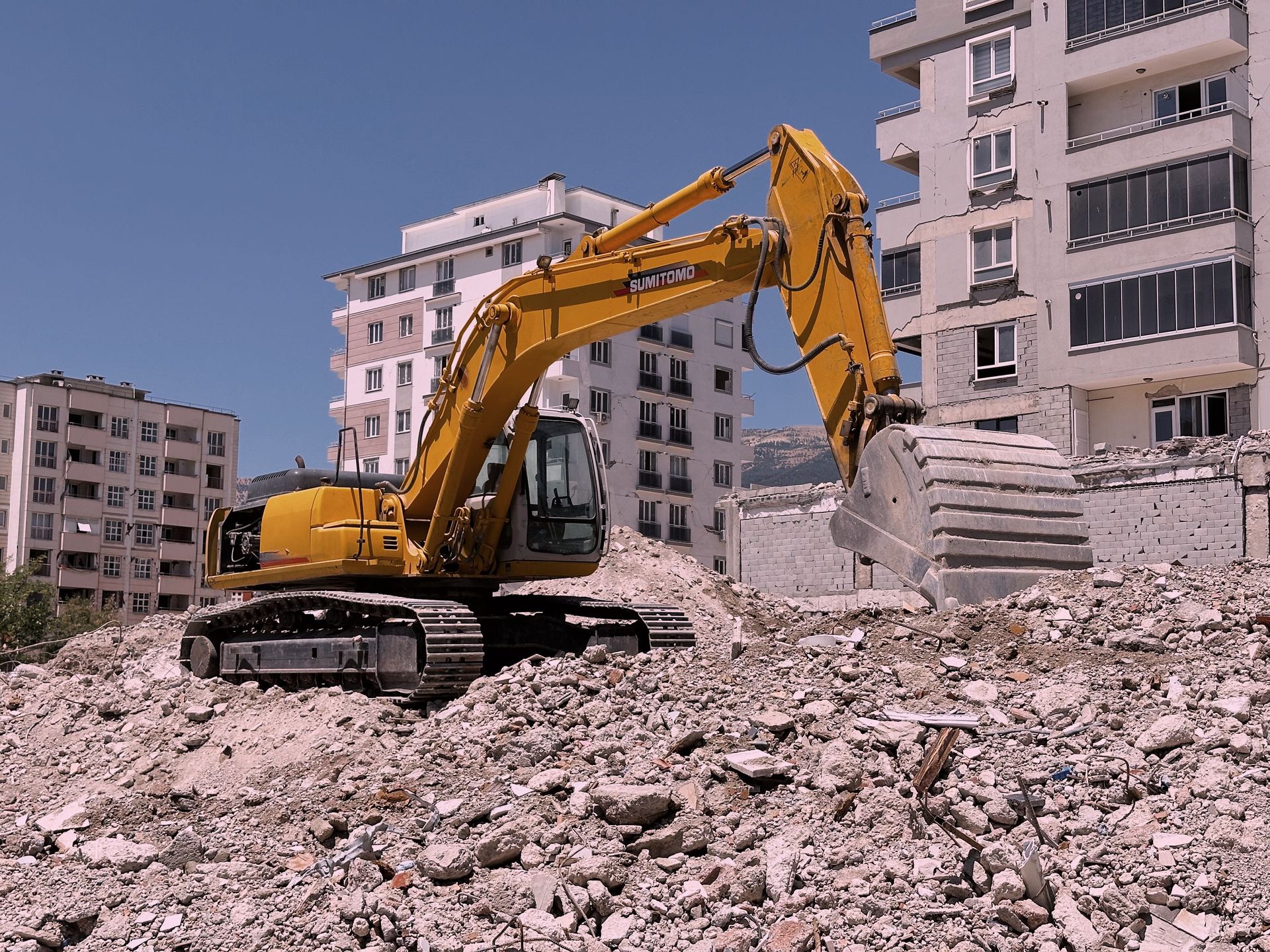
The construction and demolition industries send a massive volume of materials to landfills, but reuse can make a big difference, panelists said at the Northeast Recycling Council’s (NERC) Annual Rethink Resource Use Conference in Plainsboro, New Jersey on Wednesday. In New York City, 60% of the total waste stream is construction and demolition (C&D) waste, said Kelly Tigera, the founder and CEO of Orbit , an online marketplace for reclaimed construction materials launched in 2005 in the Big Apple. In the US overall, C&D waste has been estimated at 23% of the total waste stream . According to the EPA , 600 million tons of C&D debris were generated in the United States in 2018, which was more than twice the amount of generated municipal solid waste. Just over 455 million tons of C&D debris were directed to next use (primarily as aggregate); the rest went to landfills. Construction is “one of the most wasteful industries,” said panelist Andrew Sigal, a market manager at the U.S. Green Building Council (USGBC). “Within that 145 million tons lies a significant opportunity to really decrease waste and direct more material towards its highest and best use.” At New York construction sites, 10% to 15% of all new materials are thrown away unused, said Tigera. So reuse has the potential to draw from brand new stock as well as used materials. And reuse can help address supply chain and affordability concerns; construction material costs have increased 43% since February 2020, said Tigera. “In terms of value for users, we can provide access to free and low-cost materials,” said Tigera. “We can provide tax write-offs for donated materials, and we also help sellers save on hauling and dumping costs.” From panels to seats Tigera gave a few examples of recent salvage efforts that have leveraged her marketplace. Deconstruction contractor CO Adaptive recovered wood panels from an auditorium at Hunter Brookdale School of Nursing. The panels ended up in four different sites around Brooklyn. Auditorium seats were donated to SoHo Playhouse. In another project, Orbit worked with the city’s Port Authority to salvage historic bricks from retaining walls in Lincoln Tunnel. Orbit is also working with the agency to design a reuse plan for a bus terminal that is scheduled to come down in a few years. New York City also has a new initiative called the Circular Construction Hub, which is going to be a reuse center for contractors where they can drop off material. Orbit is the online marketplace for that project, said Tigera. She added that some of the most popular materials on her platform have been doors, shelving, cabinets and acoustic panels. In addition to traditional contractors, buyers include the film industry (for building sets) and the events industry. A lot of reuse work is already happening around the city and country, “we’re just helping it scale,” said Tigera. Yarden Jarari, an architect and sustainability adviser at Arcadis , a design and engineering firm, said her recent research suggests the value of pilot projects when it comes to reuse in the C&D space. “You can have pilot projects that are not going to totally overwhelm someone trying something new,” she said. “And also iterate over time with a lot of long-term relationships where you have repeat partners, repeat teams, and have that opportunity to build and bite off more and more rather than trying to do everything at once.” Jarari added that she would like to see “ways that we can start to measure outbound materials that are coming out of a space the same way that we’re thinking about what’s going into a space.” Having that data could make it easier to drive reuse, she said. Sigal said certification systems, like those offered from the USGBC, can incentivize reuse. The organization’s True certification for zero waste (with Green Business Certification Inc.) has a particular focus on reuse, he noted. As a case study, Sigal mentioned 270 Park Ave. in midtown Manhattan. The 60-story headquarters of JPMorganChase opened in October 2025 as a LEED platinum project. The previous building at the site, the former headquarters for Union Carbide, was deconstructed, with 97% of its materials reused or recycled. Evolving mindset The panelists agreed that the mindset in the C&D industry is starting to tilt toward reuse, spurred by environmental and cost concerns. “Our thesis has been if we can provide demand and show that there’s demand for these materials, everything else will wind up behind it,” said Tigera. She added that government procurement can help drive more reuse in the industry. Tigera also pointed out that salvaged materials are often routed through resellers, who clean and organize them, making purchasing of used goods as easy as buying new. Sigal added that he would like to see more policy support for C&D reuse. In New York, several bills have been introduced that would bolster reporting and encourage reuse. “Building reuse saves carbon, but also saves resources from having to be extracted, harvested, manufactured and installed,” said Sigal. “Not to mention the end-of-life considerations there.” Read on Resource Recycling.