

Northeast Policy Guide
The Northeast States Policy Guide serves as a comprehensive reference for understanding the current landscape of solid waste and recycling-related policies across eleven Northeast states. Its purpose is to provide state agencies, policymakers, municipal staff, industry partners, nonprofits, and other stakeholders with a clear and consistent overview of each state’s regulatory framework, program structure, and policy priorities related to waste reduction, reuse, recycling, and circular economy initiatives.
The guide is also designed to support cross-state learning, promote collaboration, and highlight opportunities for policy alignment and innovation throughout the region.
Table of Contents
INTRODUCTION
Purpose
The Northeast States Policy Guide serves as a comprehensive reference for understanding the current landscape of solid waste and recycling-related policies across eleven Northeast states. Its purpose is to provide state agencies, policymakers, municipal staff, industry partners, nonprofits, and other stakeholders with a clear and consistent overview of each state’s regulatory framework, program structure, and policy priorities related to waste reduction, reuse, recycling, and circular economy initiatives.
The guide is also designed to support cross-state learning, promote collaboration, and highlight opportunities for policy alignment and innovation throughout the region.
Overview of Participating Northeast States
This guide includes detailed policy information from the following Northeast states:
Connecticut
Delaware
Maine
Maryland
Massachusetts
New Hampshire
New Jersey
New York
Pennsylvania
Rhode Island
Vermont
Each state maintains unique legal structures, programmatic approaches, and levels of engagement with materials management and extended producer responsibility (EPR) initiatives. By presenting these policies side by side, this guide shows the regional context and identifies where models, tools, or best practices may be transferable.
Survey Methodology
Data for this guide was collected through a standardized survey distributed to state government representatives responsible for solid waste, recycling, or materials management programs. Respondents provided information on:
Product Bans: Laws or regulations that prohibit the sale, distribution, or use of specific products or materials, often due to environmental, health, or waste management concerns.
Product Stewardship Programs: Policies that assign responsibility for managing products at end of life to producers, retailers, consumers, or other entities. This can include policies such as extended producer responsibility (EPR) and deposit return systems (DRS). The structure of these policies can vary, but they may include elements such as:
- Producer-Funding
- Advanced Consumer Fees/Point-of-sale Eco-Fees
- Labeling requirements
- Recyclability requirements
- Disclosure requirements
If there are fees associated with the program, they can be either producer or consumer funded, or a combination of both.
Minimum Post-Consumer Recycled Content requirements: Laws that require certain products or packaging to contain a minimum percentage of post-consumer recycled material, with the goal of strengthening end markets for recycled materials and reducing use of raw materials. Minimum PCR laws can be considered a form of Product Stewardship.
Mandatory Recycling Laws: Requirements that certain entities (such as households, businesses, or institutions) separate designated recyclable materials and ensure they are properly recycled. Mandatory recycling laws may require that haulers and/or facilities collect certain materials.
Disposal Bans: Regulations that prohibit specific materials or products from being disposed of in landfills or incinerators, typically because they are recyclable, hazardous, or require specialized management.
Additional policies related to waste reduction, reuse, and recycling.
All responses were reviewed for clarity and completeness. When necessary, follow-up communication with respondents was conducted to verify details or obtain missing information. Policy descriptions reflect state-provided data and publicly available regulatory documents as of the publication date of this guide.
How to Use the Guide
The guide is organized into two main sections:
- Regional Overview & Comparison: This section aggregates state-level data to identify policy trends, differences, gaps, and opportunities across the region.
- State Profiles: Each state has a dedicated section summarizing its policies.
Readers may use the guide to:
- Compare policy approaches among states
- Support policy development or updates
- Assist with research, planning, and program design
- Inform cross-state collaboration or regional initiatives
- Identify models or frameworks that may be relevant to their own jurisdictions or organizations
This guide is intended to be a practical, user-friendly resource for navigating the evolving landscape of sustainable materials management in the Northeast.
REGIONAL OVERVIEW & COMPARISON
Regional Policy Landscape
Across the Northeast’s 11 states, survey responses show a mixture of policy approaches to sustainable materials management.
Key patterns:
- Product Bans are common for certain single-use plastics and expanded polystyrene (EPS) in many states; some states also have bans for mercury-containing products and other targeted toxics.
- Product Stewardship and EPR activity vary: several states (CT, ME, MD, MA, NH, NJ, NY, PA, RI, and VT) report active Producer-Funded programs, Consumer / Eco Fee programs, or combinations of both for materials such as electronics, paint, tires, mattresses, batteries, mercury thermostats, carpet, and packaging. In some states, programs are fully Producer-Funded, while others rely on Consumer / Eco Fees (such as deposits or point-of-sale stewardship fees) or a combination of both approaches. Some states also use regulatory approaches categorized as “Other,” including retailer take-back requirements, registration incentives, or material-specific management mandates.
- Minimum Post-Consumer Recycled Content laws exist in some states: CT (paper products and plastic beverage containers), ME (plastic beverage containers), MD (packaging performance goals to be established through producer responsibility rulemaking), NH (state procurement requirements for recycled-content printing paper), NJ (multiple packaging types), and NY (carpet).
- Mandatory Recycling Laws exist in most states, though the exact scope varies (municipal planning, commercial generator requirements, or material-specific rules).
- Disposal Bans are widely used: commonly banned items include e-waste (covered devices), batteries, whole tires, food and yard waste (in some states), white goods, mercury-added products, and other regulated materials. Implementation is sometimes permit-based (e.g., Delaware, Maryland), rule-based (e.g., Massachusetts), or statute-based.
Comparison of Policy Tools Across States
The Comparison of policy tools across Northeast states (Table 1) shows the primary policy tools used across each of the eleven Northeast states. Each row represents a state, and each column represents one of the five major policy categories evaluated in this guide: product bans, product stewardship programs, minimum post-consumer recycled content requirements, mandatory recycling laws, and disposal bans. A checkmark indicates that the state reported having that policy tool in place.
Table 1. Comparison of policy tools across Northeast states
| State | Product Bans | Product Stewardship Programs (including EPR) | Minimum Post-Consumer Recycled Content | Mandatory Recycling Laws | Disposal Bans |
|---|---|---|---|---|---|
| Connecticut (CT) | ✓ | ✓ | ✓ | ✓ | ✓ |
| Delaware (DE) | - | - | - | ✓ | ✓ |
| Maine (ME) | ✓ | ✓ | ✓ | ✓ | ✓ |
| Maryland (MD) | ✓ | ✓ | ✓ | ✓ | ✓ |
| Massachusetts (MA) | ✓ | ✓ | - | - | ✓ |
| New Hampshire (NH) | ✓ | ✓ | ✓ | - | ✓ |
| New Jersey (NJ) | ✓ | ✓ | ✓ | ✓ | ✓ |
| New York (NY) | ✓ | ✓ | ✓ | ✓ | ✓ |
| Pennsylvania (PA) | - | ✓ | - | ✓ | ✓ |
| Rhode Island (RI) | - | ✓ | - | ✓ | - |
| Vermont (VT) | ✓ | ✓ | - | ✓ | ✓ |
A few patterns emerge from this comparison, such as that most states report using multiple policy tools in combination, particularly product stewardship programs, mandatory recycling laws, and disposal bans. States such as Connecticut, Maine, Maryland, New Jersey, and New York show broad engagement across all five policy categories. Delaware and Rhode Island show more limited coverage in the survey responses, though both still participate in key areas such as mandatory recycling.
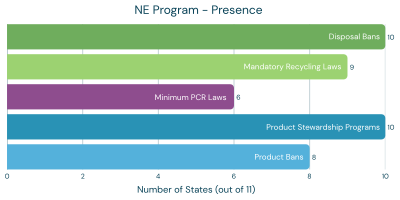
Similarly, the Northeast Program-Presence bar chart (Figure 1) highlights how widely each major policy tool is used across the Northeast states by showing the number of states that have adopted each approach. Disposal bans and mandatory recycling laws are the most consistently implemented tools, with 10 and 9 states, respectively, indicating a strong regional emphasis on controlling end-of-life management. Product stewardship programs are also widely used, with 10 states, while minimum post-consumer recycled content requirements appear in only 6 states, suggesting this is a more recent or evolving policy area. Product bans fall in the middle, with 8 states, reflecting targeted use rather than universal adoption.
Figure 1. Total number of Northeast states that have adopted each policy tool
Product Stewardship Program Structures
The comparison of product stewardship program funding mechanisms (Table 2) shows the prevalence in the Northeast of two common approaches to funding stewardship programs. In Producer-Funded programs, manufacturers finance and manage end-of-life systems, whereas in Advanced Consumer / Eco-Fee programs, costs are shared with or passed on to consumers through fees such as deposits or point-of-sale charges.
Table 2. Product stewardship program funding mechanisms across the eleven Northeast states
| State | Producer-Funded | Advanced Consumer Eco-Fees |
|---|---|---|
| Connecticut (CT) | ✓ | ✓ |
| Delaware (DE) | - | - |
| Maine (ME) | ✓ | ✓ |
| Maryland (MD) | ✓ | ✓ |
| Massachusetts (MA) | ✓ | - |
| New Hampshire (NH) | ✓ | - |
| New Jersey (NJ) | ✓ | ✓ |
| New York (NY) | ✓ | ✓ |
| Pennsylvania (PA) | ✓ | - |
| Rhode Island (RI) | ✓ | ✓ |
| Vermont (VT) | ✓ | - |
The table shows that producer-funded approaches are widely used across the region, with most states reporting at least one such program. A significant number of states—including Connecticut, Maine, Maryland, New Jersey, New York, Rhode Island and Vermont —also incorporate consumer or eco-fee mechanisms. Vermont's paint program is "Both" producer and eco-fee funded. This indicates that while stewardship is broadly adopted, funding structures vary, and many states rely on a combination of approaches rather than a single model.
Material-Level Policy Coverage
The comparison of program presence by material type (Table 3) provides a detailed, material-level view of policy coverage across the Northeast states. Each row represents a material category, and each column represents a state. A checkmark indicates that the state reported adopting any type of policy tool affecting that material, including product bans, product stewardship programs, mandatory recycling requirements, disposal bans, or other regulatory provisions.
This table highlights where policy attention is most concentrated. Materials such as electronics, mercury thermostats, tires, rechargeable batteries, paint, beverage containers, fluorescent lighting, mercury-added products, and yard waste/leaves are addressed by most states, indicating strong regional alignment. In contrast, emerging or less-regulated materials— such as auto disposal, electric vehicle batteries, septage, sharps, boat wrap, and solar panels—appear in very few states or none, suggesting areas where policy is still developing. The table also illustrates the diversity of approaches, with some states covering a broad range of materials while others focus on more limited categories.
Table 3. Materials and Products Covered by Policy Tools Across Northeast States
| Material / State | CT | DE | ME | MD | MA | NH | NJ | NY | PA | RI | VT |
|---|---|---|---|---|---|---|---|---|---|---|---|
| Auto Disposal | X | ||||||||||
| Beverage Containers | X | X | X | X | X | X | X | ||||
| Boat Wrap | |||||||||||
| Carpet | X | X | |||||||||
| Cell Phones | X | X | X | ||||||||
| Electric Vehicle Batteries | X | ||||||||||
| Electronics | X | X | X | X | X | X | X | X | X | X | |
| Fluorescent Lighting | X | X | X | X | X | X | X | ||||
| Food Residuals / Organics | X | X | X | X | X | X | |||||
| Gas Cylinders | X | X | X | ||||||||
| Household Hazardous Waste | X | X | X | X | X | ||||||
| Lead-Acid Batteries | X | X | X | X | X | X | X | ||||
| Mattresses | X | X | X | ||||||||
| Mercury Switches | X | X | X | X | X | X | |||||
| Mercury Thermostats | X | X | X | X | X | X | X | X | X | ||
| Mercury-Added Products (general) | X | X | X | X | X | X | X | ||||
| Packaging & Paper | X | X | X | ||||||||
| Paint | X | X | X | X | X | X | X | ||||
| Pesticide Containers | X | X | X | ||||||||
| PFAS Products | X | X | X | ||||||||
| Pharmaceuticals | X | X | X | X | |||||||
| Plastic Bags | X | X | X | X | X | ||||||
| Polystyrene (EPS) | X | X | X | X | X | X | |||||
| Rechargeable Batteries | X | X | X | X | X | X | X | ||||
| Scrap Metal | X | X | |||||||||
| Septage | X | ||||||||||
| Sharps | X | ||||||||||
| Solar Panels | |||||||||||
| Textiles | X | X | |||||||||
| Tires | X | X | X | X | X | X | X | X | |||
| White Goods | X | X | X | X | |||||||
| Wood Waste | X | X | X | ||||||||
| Yard Waste / Leaves | X | X | X | X | X | X | X |
Policy Coverage by State
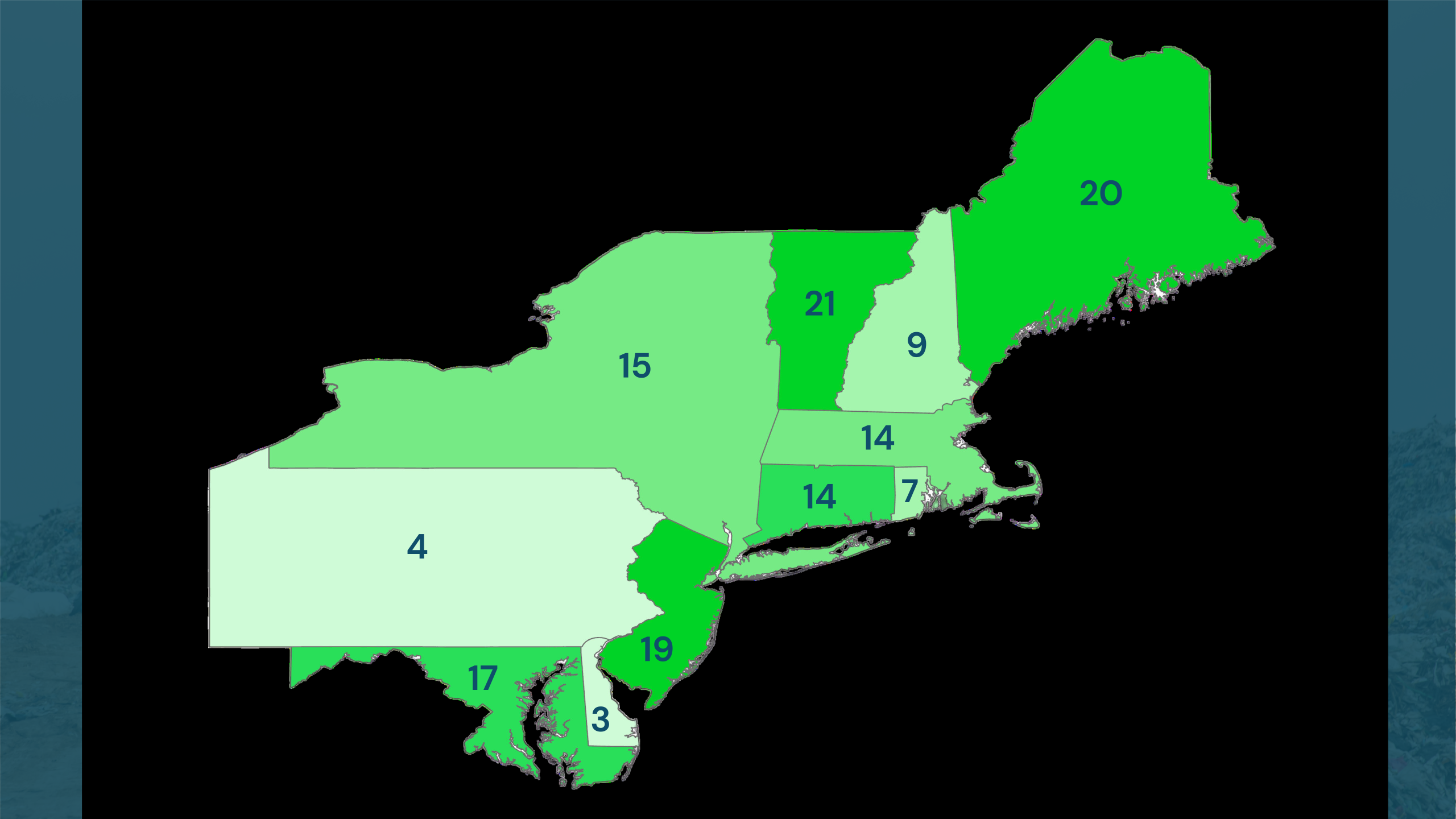
Figure 2 compares how broadly each state addresses different material categories through policy by showing the number of different materials that each state has policies on. States like Vermont (21 materials), Maine (20 materials), and New Jersey (19 materials) show higher coverage, indicating more comprehensive approaches across multiple materials. Others, such as Delaware (3 material), Pennsylvania (4 materials), Rhode Island (7 materials), and New Hampshire (9 materials), reflect more limited coverage. This variation illustrates that while all states engage in materials management policy, the scope and breadth of coverage differ significantly.
Figure 2. Number of materials and products covered by state programs
The comparison of material coverage tiers (Table 4) ranks materials based on how many states report having a policy or program addressing them, providing a regional perspective on policy coverage. Materials are grouped into coverage tiers: from “No Coverage” with 0 states; “Low” with 1-2 states, “Moderate” with 3-6 states, and “Wide” with 7-10 states, based on the number of states with reported programs.
The ranking highlights key regional trends. Electronics, mercury thermostats, tires, rechargeable batteries, beverage containers, paint, fluorescent lighting, mercury-added products, lead-acid batteries, and yard waste/leaves fall into the highest coverage tier. The moderate tier includes materials such as plastic bags, polystyrene, wood waste, and packaging, where policies are present but not universal. At the lower end, materials such as solar panels, electric vehicle batteries, textiles, and other niche waste streams show limited or no coverage, highlighting emerging areas for future policy development.
Table 4. Coverage Tiers for Materials and Products Across the Eleven Northeast States
| Material | States with program | Coverage tier |
|---|---|---|
| Solar Panels | 0 | No coverage |
| Boat Wrap | 0 | No coverage |
| Auto Disposal | 1 | Low (1–2 states) |
| Electric Vehicle Batteries | 1 | Low |
| Septage | 1 | Low |
| Sharps | 1 | Low |
| Carpet | 2 | Low |
| Scrap Metal | 2 | Low |
| Textiles | 2 | Low |
| Cell Phones | 3 | Moderate (3–6 states) |
| Gas Cylinders | 3 | Moderate |
| Mattresses | 3 | Moderate |
| Packaging & Paper | 3 | Moderate |
| Pesticide Containers | 3 | Moderate |
| PFAS Products | 3 | Moderate |
| Wood Waste | 3 | Moderate |
| Pharmaceuticals | 4 | Moderate |
| White Goods | 4 | Moderate |
| Household Hazardous Waste | 5 | Moderate |
| Plastic Bags | 5 | Moderate |
| Food Residuals / Organics | 6 | Moderate |
| Mercury Switches | 6 | Moderate |
| Polystyrene (EPS) | 6 | Moderate |
| Beverage Containers | 7 | Wide (7–11 states) |
| Fluorescent Lighting | 7 | Wide |
| Lead-Acid Batteries | 7 | Wide |
| Mercury-Added Products (general) | 7 | Wide |
| Paint | 7 | Wide |
| Rechargeable Batteries | 7 | Wide |
| Yard Waste / Leaves | 7 | Wide |
| Tires | 8 | Wide |
| Mercury Thermostats | 9 | Wide |
| Electronics | 10 | Wide |
Most Widely Regulated Materials
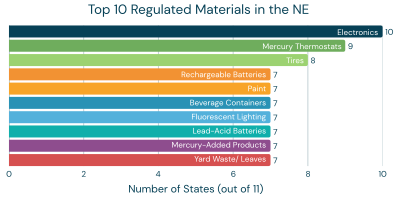
Figure 3 highlights the ten most widely regulated materials across the Northeast, based on the number of states reporting a policy or program for each material. The values represent how many of the eleven states address each material in some way.
This top ten list underscores the region’s strongest areas of policy alignment. Electronics and mercury thermostats remain the most consistently regulated materials, followed by tires. Rechargeable batteries, paint, beverage containers, fluorescent lighting, mercury-added products, lead-acid batteries, and yard waste/leaves complete the top tier. These materials represent long-standing priorities in materials management policy, with established infrastructure and regulatory frameworks in place across most states.
Figure 3. Top ten materials and products covered by state programs in the Northeast
Summary of Product Stewardship Approaches
Figure 4 provides an aggregate view of how frequently different types of funding mechanisms are used by product stewardship programs reported across the region. The totals reflect how many programs fall into each category: Producer-Funded, Advanced Consumer / Eco-Fee, Both, and Other regulatory approaches. Producer-funded programs represent the largest share (47%), indicating a strong regional trend toward assigning financial and operational responsibility to manufacturers. However, a notable portion of programs also incorporate advanced consumer or eco-fees (15%), reflecting cost-sharing models that distribute responsibility between producers and consumers. Programs categorized as Both (5%) combine producer funding with consumer-paid fees, using shared financing mechanisms to support collection, recycling, or end-of-life management.
Figure 4. Funding mechanisms used in Northeast product stewardship programs
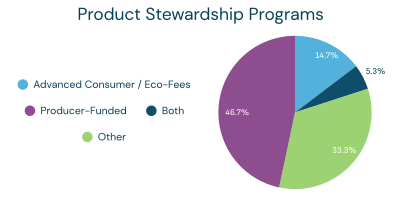
Additionally, a significant number of programs fall under “Other” approaches (33%), which include regulatory mechanisms such as retailer take-back requirements, registration incentives, and material-specific management rules such as disclosure, labeling, or recyclability requirements. This distribution demonstrates that states are not relying on a single model but instead are using a mix of policy tools to address different materials and program goals. Together, these approaches reflect a flexible and evolving policy landscape across the Northeast.
STATE PROFILES
Connecticut
View CT State ProfileState Policy Snapshot
Connecticut’s solid waste and recycling policy framework includes product bans on certain plastic bags and mercury-containing products, multiple Extended Producer Responsibility and product stewardship programs, post-consumer recycled content requirements, mandatory recycling laws for designated materials and organics, and disposal bans for specific materials including grass clippings, lead-acid batteries, and covered electronic devices.
Delaware
View DE State ProfileState Policy Snapshot
Delaware’s solid waste and recycling policy framework includes mandatory recycling requirements, a disposal ban on yard waste through landfill permit conditions, and additional statutes related to solid waste management and pharmaceutical regulation. The state does not currently have product bans, Extended Producer Responsibility or other product stewardship programs, or minimum post-consumer recycled content requirements.
Maine
View ME State ProfileState Policy Snapshot
Maine’s solid waste and recycling policy framework includes extensive product bans, particularly for products containing perfluoroalkyl and polyfluoroalkyl substances (PFAS), Extended Producer Responsibility and other product stewardship programs, minimum post-consumer recycled content requirements, mandatory recycling for certain generators, and disposal and sales bans for certain mercury-added products.
Maryland
View MD State ProfileState Policy Snapshot
Maryland’s solid waste and recycling policy framework includes product bans on expanded polystyrene food service products and certain toxics; multiple producer responsibility and stewardship programs; a producer responsibility law for packaging and paper products; mandatory recycling rate requirements for political jurisdictions; food residual diversion requirements; disposal bans for specific materials; recycling market development provisions; recycled-content related provisions for specific materials; and sustainable materials management goals established through statute and executive order.
Massachusetts
View MA State ProfileState Policy Snapshot
Massachusetts’ solid waste and recycling policy framework includes product bans for certain mercury-containing products, product stewardship programs for beverage containers and mercury-added thermostats, waste disposal bans that function similarly to mandatory recycling requirements, disposal bans for mercury-added products, food waste disposal bans and other materials.
New Hampshire
View NH State ProfileState Policy Snapshot
New Hampshire’s solid waste and recycling policy framework includes statutory product bans for toxics in packaging and certain mercury- and PFAS-containing products, a producer-funded mercury thermostat collection program, limited minimum post-consumer recycled content procurement requirements, statutory disposal bans for specific materials that effectively require recycling, and a statutory disposal reduction goal.
New Jersey
View NJ State ProfileState Policy Snapshot
New Jersey’s solid waste and recycling policy framework includes statewide product bans on single-use plastics and polystyrene, minimum post-consumer recycled content requirements for multiple packaging types, county-based mandatory recycling requirements, disposal bans for a range of hazardous and regulated materials, and regulatory programs governing universal waste, medical waste, and electronic waste.
New York
View NY State ProfileState Policy Snapshot
New York’s solid waste and recycling policy framework includes product bans on plastic bags, expanded polystyrene foam containers and packing peanuts, and small plastic hospitably containing personal care products; multiple Extended Producer Responsibility and product stewardship programs; municipal source-separation requirements; retailer take-back requirements; organics recycling requirements for certain generators; and disposal bans for select materials including electronics, rechargeable batteries, mercury thermostats, and mercury-added consumer products.
Pennsylvania
View PA State ProfileState Policy Snapshot
Pennsylvania’s solid waste and recycling policy framework includes waste tire recycling requirements, household hazardous waste collection programming, municipal recycling obligations under Act 101, disposal bans for certain materials, and statewide recycled-content procurement requirements for state agencies.
Rhode Island
View RI State ProfileState Policy Snapshot
Rhode Island’s solid waste and recycling policy framework references statewide waste and recycling laws administered through the Rhode Island Department of Environmental Management (DEM) and Resource Recovery Corporation (RIRRC), including product stewardship and recycling requirements as described on the State Waste & Recycling Laws webpage.
Vermont
View VT State ProfileState Policy Snapshot
Vermont has an extensive solid waste and recycling policy framework that includes product bans, multiple Extended Producer Responsibility (EPR) and product stewardship programs, mandatory recycling requirements, and comprehensive disposal bans. The state emphasizes waste reduction, diversion of recyclable and organic materials, and producer responsibility for a wide range of products.
For more information or questions regarding the guide please reach out to Mariane Medeiros at mariane@nerc.org.